Knowing what to do during a stroke emergency can save a life and reduce the risk of long-term disability. A stroke occurs when blood flow to a part of the brain is interrupted or when a blood vessel in the brain bursts. Because brain cells begin to die within minutes, recognizing symptoms quickly and seeking immediate medical attention is critical.
Many people delay treatment because they are unsure whether symptoms are serious or believe they will improve on their own. However, every suspected stroke should be treated as a medical emergency.
This guide explains how to recognize stroke symptoms, what actions to take immediately, what to avoid, and what happens after reaching the hospital.
What Is a Stroke Emergency?
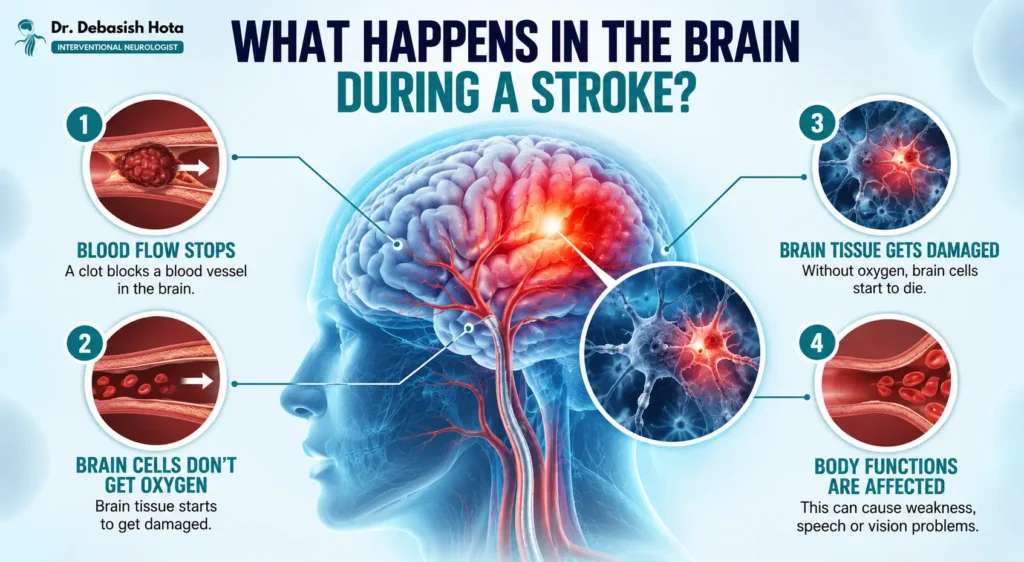
A stroke emergency occurs when blood supply to the brain is suddenly disrupted.
There are two major types of stroke:
Ischemic Stroke
This is the most common type and occurs when a blood clot blocks blood flow to the brain.
Hemorrhagic Stroke
This occurs when a blood vessel in the brain ruptures and causes bleeding.
Another related condition is:
Transient Ischemic Attack (TIA)
Often called a “mini-stroke,” a TIA causes temporary stroke-like symptoms. Even if symptoms disappear, immediate medical evaluation is essential because it may signal a future stroke.
Common Warning Signs of Stroke
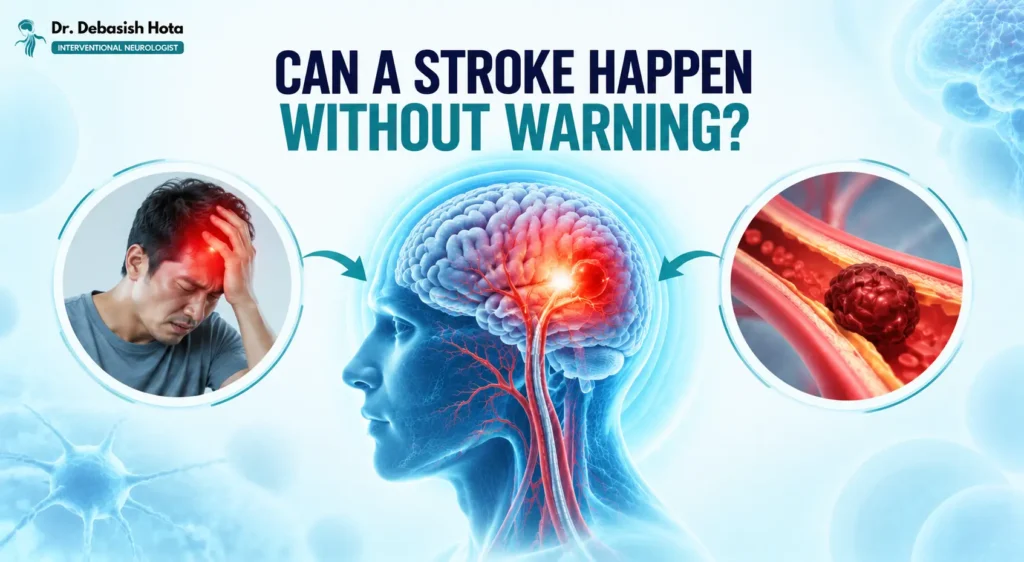
Stroke symptoms usually appear suddenly.
Seek emergency medical care if you notice:
- Sudden facial drooping
- Sudden weakness or numbness in the arm, leg, or face, especially on one side
- Slurred speech or difficulty speaking
- Difficulty understanding speech
- Sudden confusion
- Sudden blurred or double vision
- Loss of balance or coordination
- Severe dizziness
- Sudden severe headache without a known cause
Symptoms may occur alone or in combination.
How to Recognize Stroke Using the FAST Method
The FAST test is a simple way to identify possible stroke symptoms.
F – Face Drooping
Ask the person to smile.
- Does one side of the face droop?
- Is the smile uneven?
A – Arm Weakness
Ask the person to raise both arms.
- Does one arm drift downward?
- Is there weakness or numbness?
S – Speech Difficulty
Ask the person to repeat a simple sentence.
- Is speech slurred?
- Is the person unable to speak or difficult to understand?
T – Time to Call Emergency Services
If any of these signs are present, call emergency medical services immediately.
Do not wait for symptoms to improve.
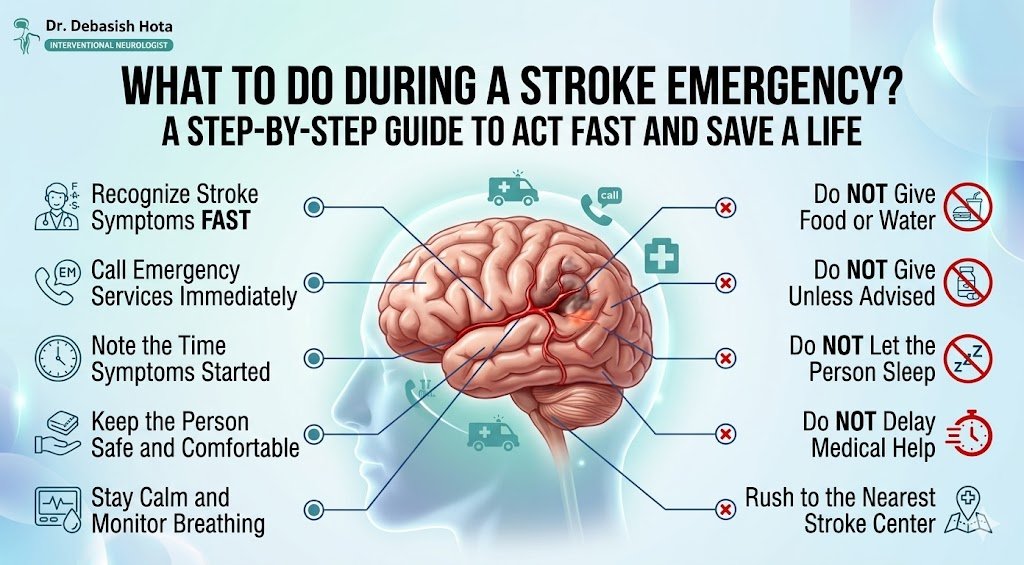
What to Do Immediately During a Stroke Emergency
Step 1: Call Emergency Medical Services Immediately
The first thing to do if someone is having a stroke is to call emergency medical services without delay.
Prompt treatment can significantly improve recovery and reduce complications.
Step 2: Note the Exact Time Symptoms Started
Record when symptoms first began or when the person was last seen normal.
This information helps doctors decide whether treatments such as clot-dissolving medications may be appropriate.
Step 3: Keep the Person Safe and Comfortable
While waiting for medical help:
- Help the person sit or lie down safely.
- Keep the head slightly elevated.
- Loosen tight clothing.
- Stay calm and reassure the person.
Step 4: Monitor Breathing and Responsiveness
Observe whether the person is:
- Awake and alert
- Breathing normally
- Becoming increasingly confused
If the person becomes unconscious and stops breathing, begin CPR if trained and instructed by emergency personnel.
Step 5: Gather Important Medical Information
If possible, keep the following ready:
- Current medications
- Previous stroke history
- Existing medical conditions
- Allergies
- Emergency contact information
What Not to Do During a Stroke Emergency
Avoid the following actions:
Do Not Delay Calling an Ambulance
Even if symptoms improve, immediate medical assessment is necessary.
Do Not Allow the Person to Drive
Stroke symptoms can worsen suddenly and make driving dangerous.
Do Not Give Food or Water
Swallowing difficulties are common during stroke and may increase the risk of choking.
Do Not Give Medications Without Medical Advice
Avoid giving aspirin or other medicines unless advised by a doctor. Aspirin may be harmful in certain types of stroke, especially bleeding strokes.
Do Not Let the Person Sleep or “Rest It Off”
Stroke symptoms require urgent evaluation, even if the person feels better.
Do Not Use Home Remedies
Home remedies should never replace emergency medical treatment.
Why Every Minute Matters in Stroke Treatment
Brain tissue can be permanently damaged during a stroke.
Rapid treatment may:
- Restore blood flow to the brain
- Reduce brain injury
- Lower the risk of long-term disability
- Improve functional recovery
The phrase “time is brain” highlights the importance of immediate treatment.
When Should You Go to the Emergency Room for Stroke Symptoms?
Go to the emergency department immediately if you experience:
- Sudden facial drooping
- Slurred speech
- One-sided weakness
- Sudden vision changes
- Severe dizziness
- Sudden severe headache
- Sudden confusion
Even if symptoms disappear within minutes, medical evaluation is still necessary.
What Happens at the Hospital During a Stroke Emergency?
After arriving at the hospital, the medical team may:
Perform a Physical and Neurological Examination
Doctors assess:
- Muscle strength
- Speech
- Vision
- Balance
- Consciousness level
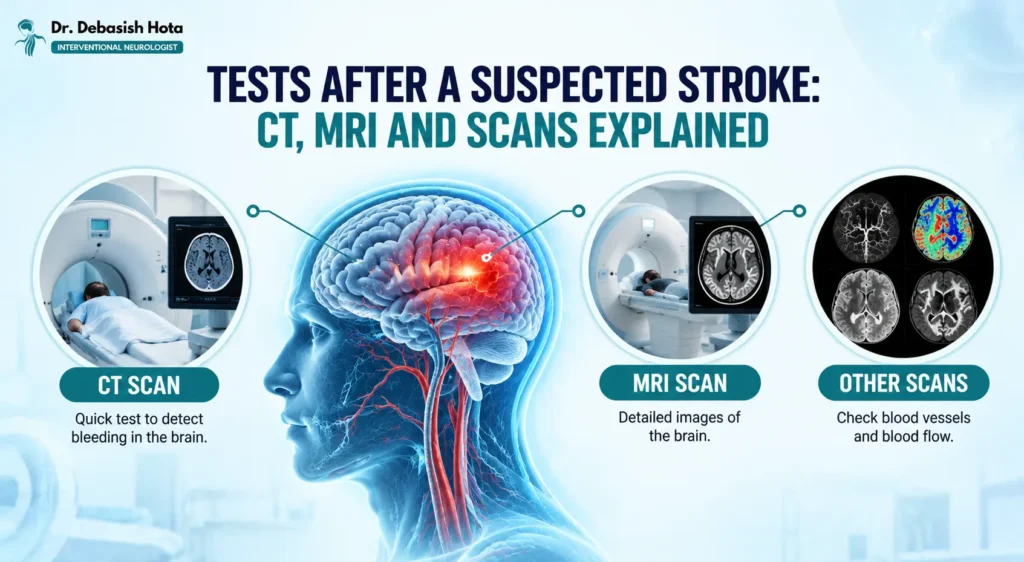
Conduct Brain Imaging
Imaging helps determine the type of stroke.
Tests may include:
- CT scan
- MRI scan
- CT angiography
Perform Blood Tests
Blood tests help identify:
- Blood sugar abnormalities
- Clotting disorders
- Other medical conditions
Treatment Options for Stroke Emergencies
Treatment depends on the type of stroke.
Treatment for Ischemic Stroke
Options may include:
Clot-Busting Medication (Thrombolysis)
Certain patients may receive clot-dissolving medicines if they arrive within an appropriate treatment window.
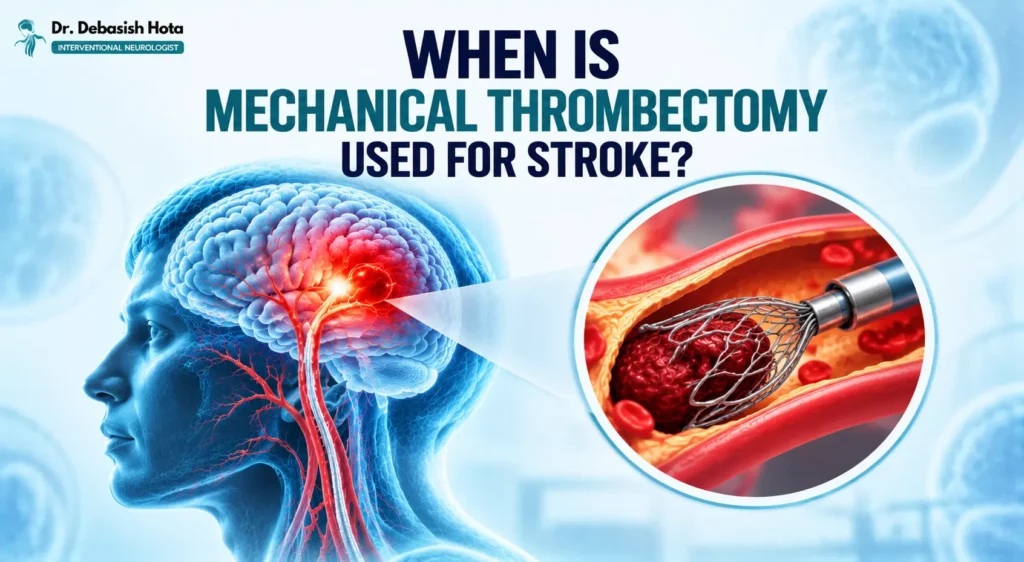
Mechanical Thrombectomy
In selected patients with large vessel blockage, specialists may remove the clot using minimally invasive neurointerventional techniques.
Treatment for Hemorrhagic Stroke
Management may include:
- Blood pressure control
- Reversal of blood-thinning medications
- Neurosurgical or neurointerventional procedures when required
Conclusion
Recognizing stroke symptoms early and acting quickly can make a significant difference. If you suspect a stroke, call emergency medical services immediately and seek urgent medical care. Never ignore symptoms, even if they improve or disappear.
If you have concerns about stroke risk, recurrent symptoms, or recovery after stroke, consult a qualified neurologist for personalized evaluation and guidance.
Medical Disclaimer
This content is intended for educational purposes only and should not be considered a substitute for professional medical advice, diagnosis, or treatment. In case of a medical emergency, contact emergency medical services immediately.
FAQs
1. What should I do if someone is having a stroke?
Call emergency medical services immediately, note the time symptoms began, keep the person safe, and avoid giving food, water, or medications unless instructed by a healthcare professional.
2. What is the first thing to do during a stroke?
The first and most important step is to call emergency medical services immediately.
3. Should I call an ambulance for stroke symptoms?
Yes. Stroke is a medical emergency and emergency transport allows faster evaluation and treatment.
4. Can stroke symptoms go away on their own?
Some symptoms may temporarily improve, especially in a transient ischemic attack (TIA), but urgent medical evaluation is still necessary.
5. Should a person with stroke symptoms drive to the hospital?
No. Driving is unsafe during a suspected stroke. Emergency medical services should be contacted.
6. Can a stroke patient eat or drink while waiting for help?
No. Stroke can affect swallowing and increase the risk of choking.