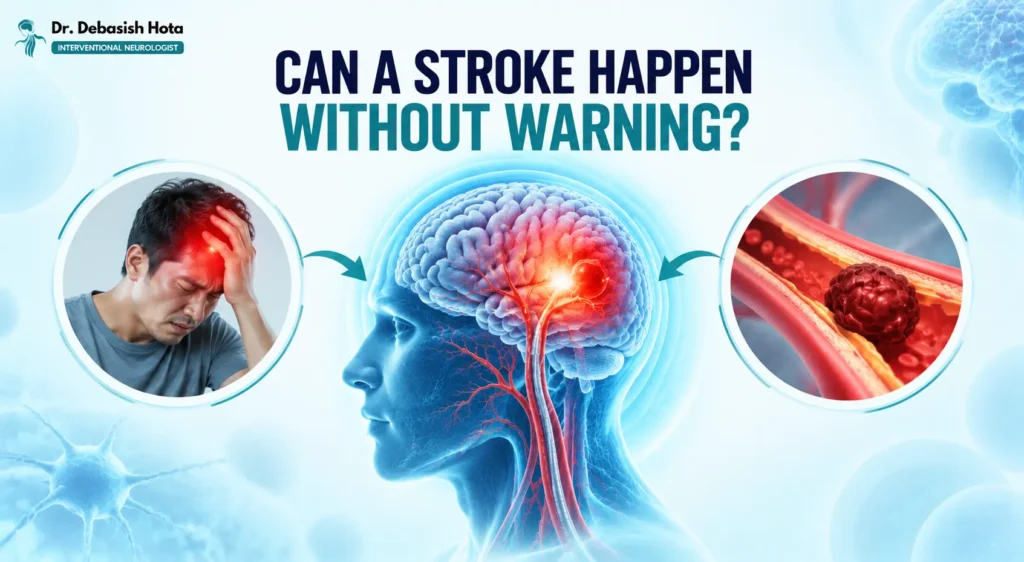
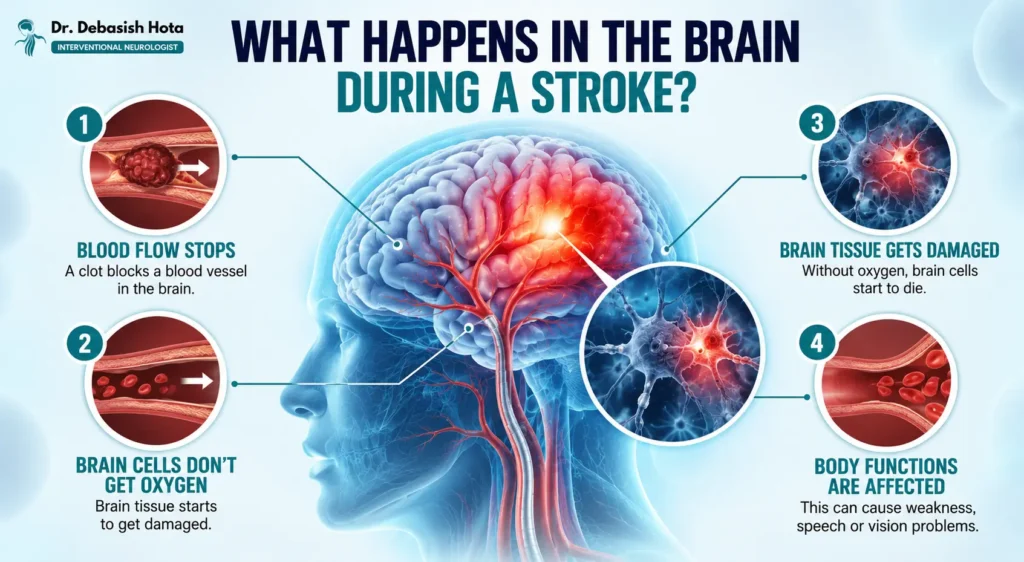
A stroke can strike without warning, and within minutes it can change how a person speaks, moves or thinks. Many people know the word, but very few understand what actually happens inside the brain when a stroke begins. Knowing this makes the warning signs easier to recognise and shows why every minute matters.
In this blog, we explain what happens in the brain during a stroke in simple, step-by-step language.
First, Why Does the Brain Need a Constant Blood Supply?
The brain is only about 2% of body weight, but it uses nearly 20% of the body’s oxygen and energy. Unlike muscles, it cannot store fuel. It depends on a steady flow of blood through a network of arteries to deliver oxygen and glucose to every brain cell.
When this flow is interrupted, even briefly, brain cells begin to suffer, and that interruption is the core of every stroke.
Step 1: Blood Flow to a Part of the Brain Is Disrupted
A stroke begins when an artery supplying the brain is either blocked or bursts. There are two main types:
- Ischemic stroke: A blood clot or fatty deposit blocks an artery. This accounts for about 85% of all strokes.
- Hemorrhagic stroke: A weakened blood vessel ruptures and bleeds into or around the brain.
In both cases, the area of the brain that depended on that artery stops getting the oxygen it needs.
Step 2: Brain Cells Start Running Out of Oxygen and Energy
Within seconds to minutes of the blockage, the affected brain cells (neurons) begin to starve. Without oxygen and glucose, they cannot produce the energy they need to function.
This is when the first symptoms appear. Depending on which part of the brain is affected, a person may suddenly have weakness on one side of the body, a drooping face, slurred speech, vision problems or loss of balance.
Step 3: The Ischemic Core and the Penumbra Form
Doctors describe the damaged area in two zones:
- The ischemic core: The centre of the affected area, where blood flow is lowest. Cells here begin to die within minutes.
- The penumbra: The surrounding zone, where blood flow is reduced but not completely gone. These cells are in danger but can still be saved if blood flow is restored quickly.
The penumbra is the reason emergency treatment works so well. The longer the blockage stays, the more of this tissue is lost and the larger the core becomes.
Step 4: A Chain Reaction of Cell Damage Begins
When neurons are starved of energy, a harmful chain reaction follows:
- Cells lose their ability to balance chemicals such as sodium and calcium.
- Too much calcium enters the cells and releases toxic substances.
- Damaged neurons release excess glutamate, a chemical messenger that over-excites nearby cells and damages them further.
- The brain swells (edema) around the injured area, putting pressure on healthy tissue.
This is why the damage from a stroke keeps spreading if treatment is delayed.
Step 5: Brain Cells Die, and Function Is Lost
If blood flow is not restored in time, neurons in the core die permanently. Brain cells do not regenerate easily, so the abilities controlled by that area, such as movement, speech, memory or vision, may be affected.
It is commonly said that during a large stroke, the brain can lose about 1.9 million neurons every minute. This is why doctors say “time is brain.”
Step 6: What Happens in a Hemorrhagic Stroke?
In a hemorrhagic stroke, the process is slightly different. The bleeding puts direct pressure on the surrounding brain tissue and also cuts off blood supply to nearby areas. The blood itself irritates the brain, which leads to swelling and further injury.
High blood pressure is the most common cause, which is why controlling it is so important for prevention.
Step 7: The Brain Begins to Recover and Rewire
The brain has an ability called neuroplasticity. After a stroke, healthy areas can slowly take over some of the functions lost from damaged areas. With the right treatment, physiotherapy, speech therapy and rehabilitation, many patients regain a significant part of their abilities.
Early treatment decides how much recovery is possible. The faster blood flow is restored, the more brain tissue is saved.
Warning Signs: Recognise a Stroke with FAST
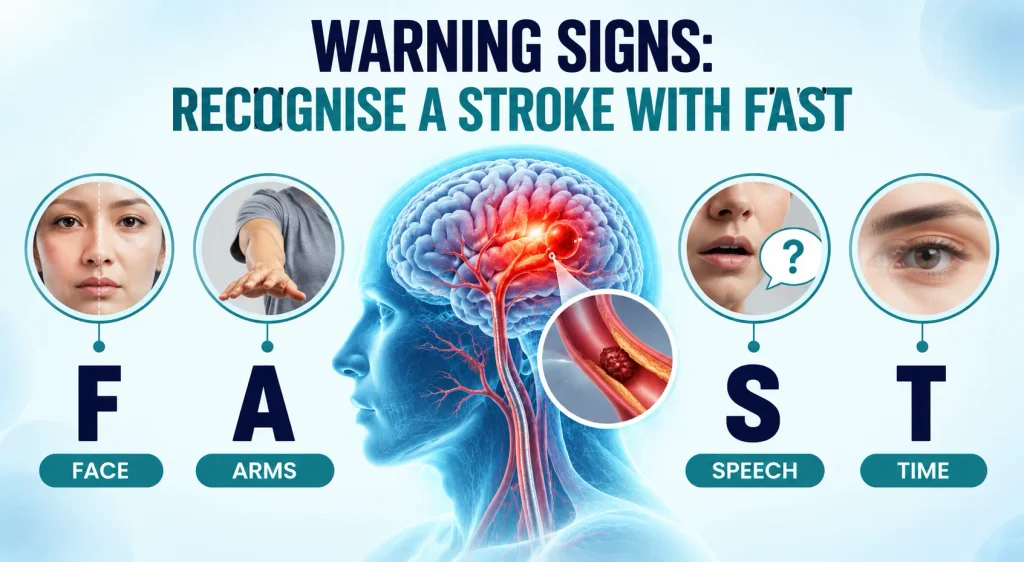
Because damage happens so quickly, recognising symptoms early is critical. Remember FAST:
- F – Face: One side of the face droops when the person smiles.
- A – Arms: One arm drifts downward or feels weak when both are raised.
- S – Speech: Speech is slurred, confused or difficult to understand.
- T – Time: Call for emergency help immediately and go to the nearest stroke-ready hospital.
Other signs include sudden severe headache, sudden vision loss, dizziness or loss of balance. Do not wait for symptoms to pass on their own.
How Is a Stroke Treated?
Treatment depends on the type of stroke and how early the patient reaches the hospital:
- Clot-dissolving medicines can open a blocked artery if given within a few hours of symptom onset.
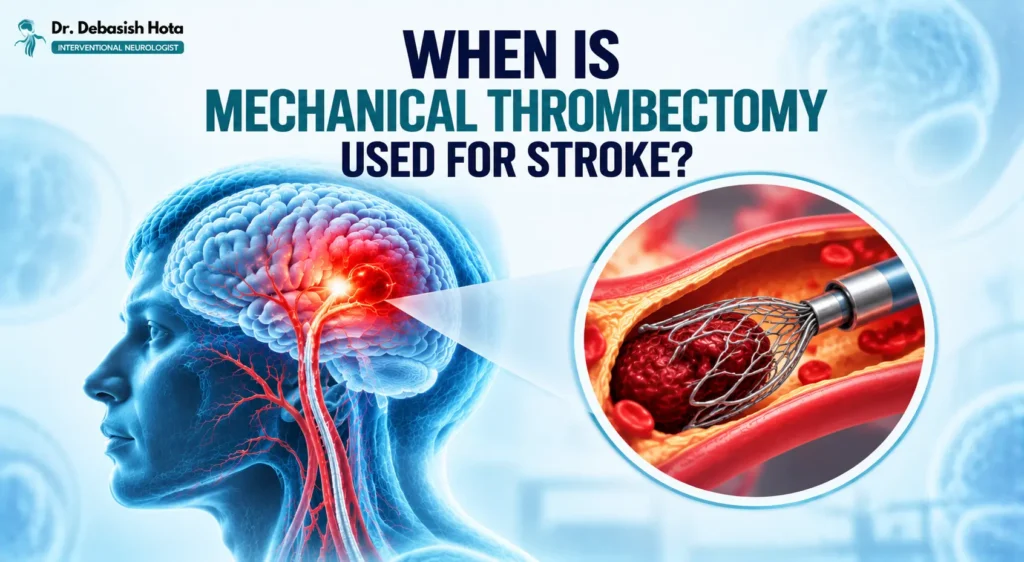
- Mechanical thrombectomy removes a large clot directly from the brain artery using a catheter, a minimally invasive technique that is a key part of modern neurointervention.
- Medicines and procedures can control bleeding and reduce pressure in hemorrhagic stroke.
- Rehabilitation begins early to help the brain recover lost function.
Because outcomes depend so heavily on speed, reaching an experienced neurologist quickly makes a real difference.
Can a Stroke Be Linked to Other Brain Conditions?
Yes. Repeated small strokes can damage brain tissue over time and increase the risk of memory problems, a condition known as vascular dementia. A stroke can also leave scarred brain tissue that sometimes triggers seizures later, which is why some survivors need long-term care for epilepsy. In some patients, stroke also affects movement and balance, and these symptoms can overlap with movement disorders and parkinsonism, so a proper neurological evaluation is important.
How to Reduce Your Risk of Stroke
Most strokes are preventable. You can lower your risk by:
- Keeping blood pressure, blood sugar and cholesterol under control
- Quitting smoking and limiting alcohol
- Staying physically active and maintaining a healthy weight
- Eating a balanced diet low in salt and processed food
- Treating irregular heartbeat (atrial fibrillation) as advised by your doctor
- Going for regular health check-ups, especially after the age of 40
People with diabetes should also watch for numbness or tingling in the feet, since this can be an early sign of nerve damage called peripheral neuropathy, which often goes hand in hand with the same blood vessel risk factors that cause stroke.
When Should You See a Neurologist?
Call emergency services immediately if you notice any stroke symptoms. Do not wait or try home remedies.
If you have risk factors such as high blood pressure, diabetes, heart disease or a family history of stroke, or if you have had a mini-stroke (TIA) in the past, it is wise to consult a specialist. Dr. Debasish Hota is a Consultant Interventional Neurologist in Bhubaneswar who treats stroke along with a wide range of other neurology services, and you can book a consultation at his clinic whenever you need expert guidance.
Final Thoughts
A stroke is a medical emergency in which blood flow to the brain is cut off and brain cells begin to die within minutes. Understanding each step, from the blocked artery to the loss of brain cells, shows why quick action matters so much. Recognising the signs early, getting to the hospital in time and managing risk factors can protect your brain and your future.
Disclaimer: This blog is for general awareness only and does not replace professional medical advice. If you or someone near you shows signs of a stroke, seek emergency medical care immediately.
FAQs:-
What happens to the brain during a stroke?
During a stroke, blood flow to a part of the brain is blocked by a clot or interrupted by a burst blood vessel. Brain cells in that area stop getting oxygen and glucose, and they begin to die within minutes. This is why a stroke needs emergency treatment, and why doctors say “time is brain.”
How long can the brain survive without blood flow during a stroke?
Brain cells start dying within minutes of losing blood supply. The area at the centre of the blockage is damaged first, while the surrounding tissue (the penumbra) can be saved if blood flow is restored quickly. Treatment is most effective in the first few hours after symptoms begin.
What are the first signs of a stroke in the brain?
The first signs usually appear suddenly. These include a drooping face, weakness or numbness in one arm or leg, slurred speech, confusion, vision problems, severe headache and loss of balance. The FAST test (Face, Arms, Speech, Time) helps you spot these signs and act quickly.
Can the brain recover after a stroke?
Yes, to a large extent. The brain can rewire itself through neuroplasticity, where healthy areas take over some functions of the damaged area. Early treatment, physiotherapy, speech therapy and regular follow-up with a neurologist improve recovery. The quicker the treatment starts, the more brain tissue is saved.
How is a stroke treated?
Treatment depends on the type of stroke. An ischemic stroke may be treated with clot-dissolving medicines or mechanical thrombectomy, a minimally invasive procedure under neurointervention. A hemorrhagic stroke focuses on controlling bleeding and reducing pressure in the brain. Rehabilitation begins early in both cases.