
Neurointervention is a specialized medical field that uses thin catheters, advanced imaging, and specialized devices or medicines to diagnose and treat selected conditions affecting blood vessels of the brain, head, neck, and sometimes spine.
It is also known as interventional neuroradiology or endovascular neurosurgery. Unlike conventional operations that may require opening the skull, many neurointerventional procedures reach the target blood vessel through a small catheter inserted into an artery.
The approach can be used in selected emergencies, such as certain strokes, as well as planned treatment of conditions such as brain aneurysms and vascular malformations.
What Does Neurointervention Mean?
In simple terms, neurointervention means treating certain neurological and blood-vessel conditions from inside the blood vessels.
A specialist uses real-time imaging to guide a catheter through the vascular system toward the area requiring diagnosis or treatment.
The basic pathway can be understood as:
Access → Catheter → Imaging → Target blood vessel → Treatment → Recovery
The procedure is selected according to the patient’s diagnosis, blood-vessel anatomy, symptoms, overall health, and treatment goals.
How Does Neurointervention Work?
A neurointerventional procedure generally begins with access to an artery, commonly through the wrist or groin.
The specialist carefully guides a thin catheter through the blood vessels while using imaging to see its position.
Once the catheter reaches the target area, specialized equipment or medication may be used to perform the required treatment.
Depending on the condition, this may involve removing a blood clot, blocking an abnormal blood vessel, placing a device inside an aneurysm, or treating selected areas of arterial narrowing.
The exact technique varies considerably between procedures.
Is Neurointervention the Same as Brain Surgery?
No. Neurointervention is not synonymous with conventional open brain surgery.
Many neurointerventional procedures use a catheter-based approach and do not require opening the skull.
However, “minimally invasive” does not mean risk-free, and neurointervention is not automatically better or safer than open surgery.
For some conditions, an open surgical procedure may be more appropriate. In others, an endovascular approach may be considered.
The decision depends on the specific disease, anatomy, treatment objectives, and overall medical condition.
What Conditions Can Neurointervention Treat?
Neurointervention is primarily used for selected conditions involving the brain and its blood vessels.
Examples include:
- Acute ischemic stroke
- Brain aneurysms
- Arteriovenous malformations (AVMs)
- Dural arteriovenous fistulas (DAVFs)
- Selected blood-vessel narrowing
- Certain other neurovascular disorders
Not every patient with one of these conditions is suitable for a neurointerventional procedure.
A specialist evaluates brain and blood-vessel imaging before recommending a particular treatment.
Common Neurointerventional Procedures
Mechanical Thrombectomy
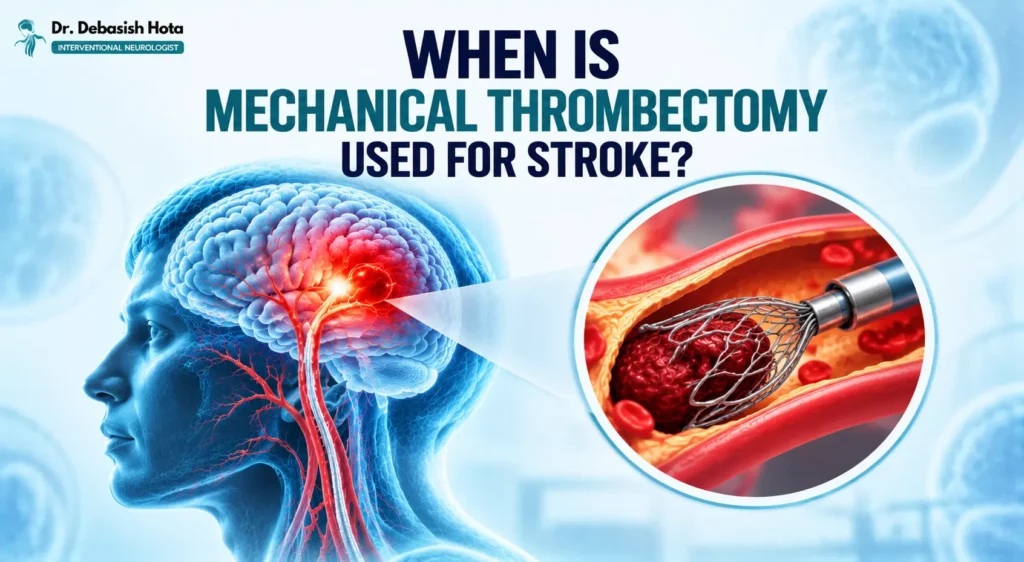
Mechanical thrombectomy is an endovascular treatment used for selected patients with an acute ischemic stroke caused by a large blood-vessel blockage.
A catheter is guided to the blocked vessel, and specialized devices are used to remove the clot and restore blood flow.
Eligibility depends on factors such as the time from symptom onset, imaging findings, location of the blockage, and the patient’s clinical condition.
Aneurysm Coiling
A brain aneurysm is a weakened area of a blood vessel that can bulge outward.
During endovascular coiling, a catheter is guided to the aneurysm and small coils are placed inside it.
The coils promote clot formation within the aneurysm and reduce blood flow into the weakened area.
In selected cases, additional devices may be used.
Flow Diversion
A flow-diverting device is a specialized stent-like device placed across the opening of certain brain aneurysms.
It changes blood flow around the aneurysm and can allow the vessel wall to heal over time.
It is appropriate only for selected aneurysms based on their size, location, shape, and other factors.
Embolization
Embolization involves intentionally blocking abnormal blood flow through a selected blood vessel.
It may be used for conditions such as certain AVMs or DAVFs.
The materials used and the technique depend on the abnormality being treated.
Cerebral Angiography
Cerebral angiography is an imaging procedure that allows specialists to examine blood vessels supplying the brain.
A catheter is used to deliver contrast material into the blood vessels while detailed images are obtained.
It may be used for diagnosis, treatment planning, or as part of an intervention.
How Is Neurointervention Used for Stroke?
Stroke is one of the most important emergency applications of neurointervention.
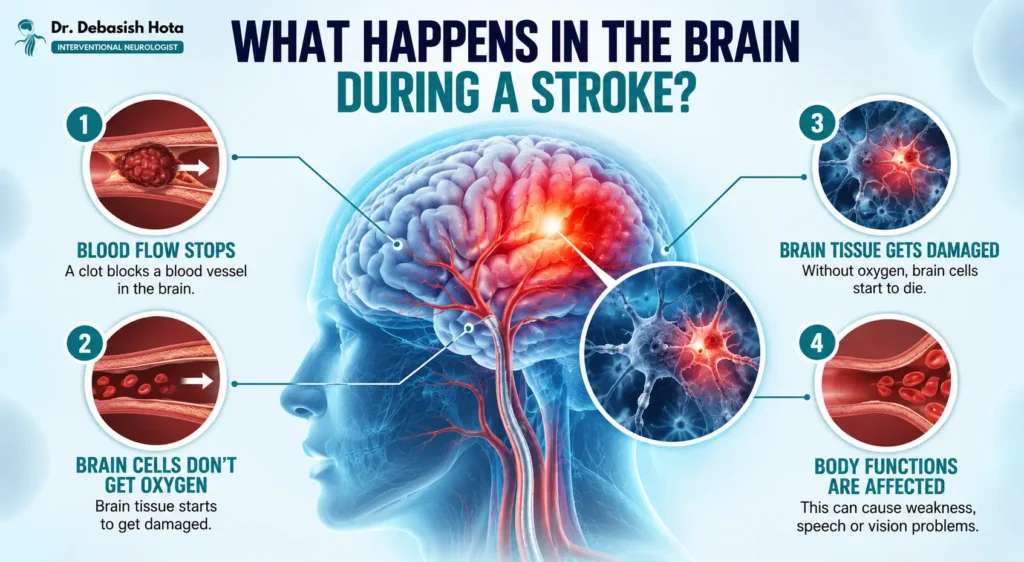
In an ischemic stroke, a blood clot can block an artery supplying the brain. In appropriately selected patients, mechanical thrombectomy may be used to remove the clot.
This is different from hemorrhagic stroke, where bleeding occurs inside or around the brain.
Because ischemic and hemorrhagic strokes require different treatment strategies, emergency brain imaging is essential before selecting treatment.
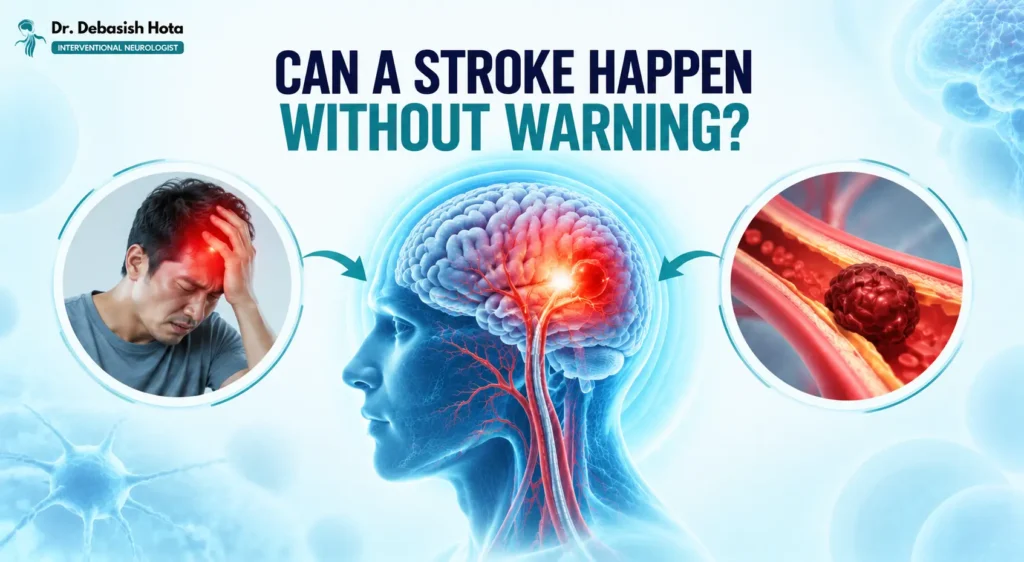
If someone develops sudden facial drooping, weakness, speech difficulty, vision problems, severe dizziness, or other possible stroke symptoms, emergency medical care should be sought immediately.
What Happens Before a Neurointerventional Procedure?
Before treatment, the medical team reviews the patient’s symptoms, medical history, medications, blood tests, and imaging.
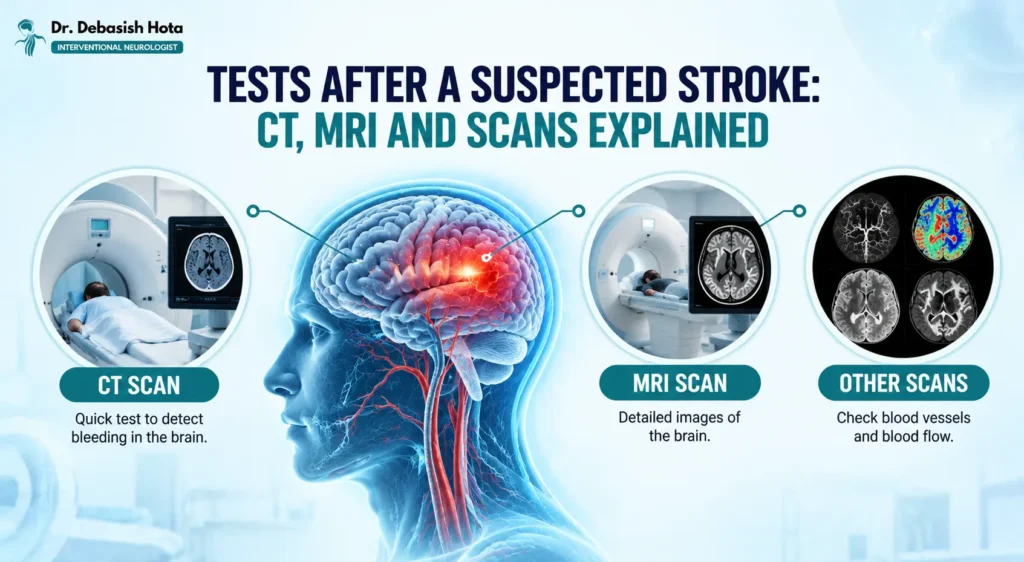
Depending on the condition, imaging may include:
- CT scan
- MRI
- CT angiography
- MR angiography
- Digital subtraction angiography
The specialist discusses the purpose of the procedure, potential benefits, possible alternatives, and relevant risks.
In emergency situations, the evaluation and treatment decision may need to happen rapidly.
What Happens During the Procedure?
The patient is positioned in an imaging suite equipped for neurovascular procedures.
After preparing the access site, the specialist introduces a catheter through an artery, often at the wrist or groin.
The catheter is guided toward the blood vessel being evaluated or treated using continuous imaging.
Depending on the procedure, the specialist may then remove a clot, place coils or another device, deliver an embolic material, or perform another targeted intervention.
Anesthesia or sedation varies according to the procedure and the patient’s clinical circumstances.
What Is Recovery Like After Neurointervention?
Recovery varies considerably between patients.
Some planned procedures may require observation for a relatively short period, while emergency stroke treatment may require intensive monitoring because the underlying brain injury itself can be serious.
After the procedure, the medical team monitors neurological status, the access site, blood pressure, and other relevant parameters.
Some patients may also need rehabilitation involving physiotherapy, occupational therapy, speech therapy, or other supportive care.
The length of hospital stay depends on the procedure, the treated condition, complications if any, and the patient’s overall recovery.
Benefits, Risks, and Limitations
A major potential advantage of catheter-based neurointervention is that selected treatments can reach blood vessels without requiring a large surgical opening.
However, minimally invasive treatment still involves important medical risks.
Possible complications vary by procedure and may include:
- Bleeding or bruising at the catheter-entry site
- Blood-vessel injury
- Infection
- Blood clots
- Stroke or neurological injury
- Reactions to contrast material
- Bleeding within or around the brain
- Device-related complications
The likelihood and severity of complications depend on the procedure and the patient’s individual circumstances.
Neurointervention should therefore be considered a specialized treatment option rather than a universally superior alternative to conventional surgery.
Who May Need Neurointervention?
A person may be considered for neurointervention when imaging and clinical evaluation identify a condition that can potentially be treated through an endovascular approach.
Examples include selected patients with:
- Large-vessel ischemic stroke
- Certain brain aneurysms
- Selected AVMs
- Certain DAVFs
- Specific vascular narrowing or other neurovascular conditions
Not everyone with these diagnoses needs an intervention.
A multidisciplinary team may include neurologists, neurointerventional specialists, neurosurgeons, neuroradiologists, anesthesiologists, and critical-care specialists, depending on the patient’s needs.
When Should You See a Neurointerventional Specialist?
A specialist consultation may be appropriate when a patient has been diagnosed with a condition that could potentially require an endovascular procedure.
Examples include a brain aneurysm, selected vascular malformation, or an ischemic stroke requiring consideration of thrombectomy.
For suspected acute stroke, however, patients should not wait for a routine consultation. Emergency medical services should be contacted immediately.
Conclusion
Neurointervention is a specialized, image-guided approach for treating selected conditions affecting the blood vessels of the brain, head, and neck.
Procedures such as mechanical thrombectomy, aneurysm coiling, embolization, flow diversion, and cerebral angiography allow specialists to diagnose or treat certain vascular problems through catheter-based techniques.
Although many procedures are minimally invasive, they are not risk-free and are not automatically better than open surgery. The appropriate treatment depends on the diagnosis, vascular anatomy, imaging findings, overall health, and clinical circumstances.
If you have been diagnosed with a neurovascular condition or have been advised to consider an endovascular procedure, discuss the available options, expected benefits, potential risks, and alternatives with a qualified specialist.
Medical Disclaimer
This article is intended for general educational purposes only. It does not replace professional medical consultation, diagnosis, or treatment. Neurointerventional procedures are specialized medical treatments, and suitability varies from patient to patient. The information provided here cannot determine whether a particular procedure is appropriate for an individual. In a suspected stroke or other neurological emergency, seek immediate emergency medical care rather than relying on information from this article.
FAQs
1. What is neurointervention?
Neurointervention is a specialized field that uses catheters, imaging guidance, and specialized devices or medicines to diagnose and treat selected conditions involving blood vessels of the brain, head, and neck.
2. Is neurointervention minimally invasive?
Many neurointerventional procedures are considered minimally invasive because they use catheter access through a small arterial puncture rather than opening the skull. However, they still carry procedure-specific risks.
3. What conditions can neurointervention treat?
Selected cases of acute ischemic stroke, brain aneurysm, AVM, DAVF, and certain blood-vessel narrowing may be treated using neurointerventional techniques. Suitability depends on individual imaging and clinical findings.
4. What is mechanical thrombectomy?
Mechanical thrombectomy is a catheter-based procedure used in selected patients with acute ischemic stroke caused by a large blood-vessel blockage. A specialized device is used to remove the clot.
5. Does neurointervention require open brain surgery?
Many neurointerventional procedures do not require opening the skull. A catheter is generally guided through the blood vessels to the treatment site using imaging.
6. Is neurointervention suitable for every patient?
No. The appropriate treatment depends on the diagnosis, blood-vessel anatomy, imaging findings, symptoms, overall health, and other clinical factors. A qualified specialist must determine whether neurointervention is appropriate.