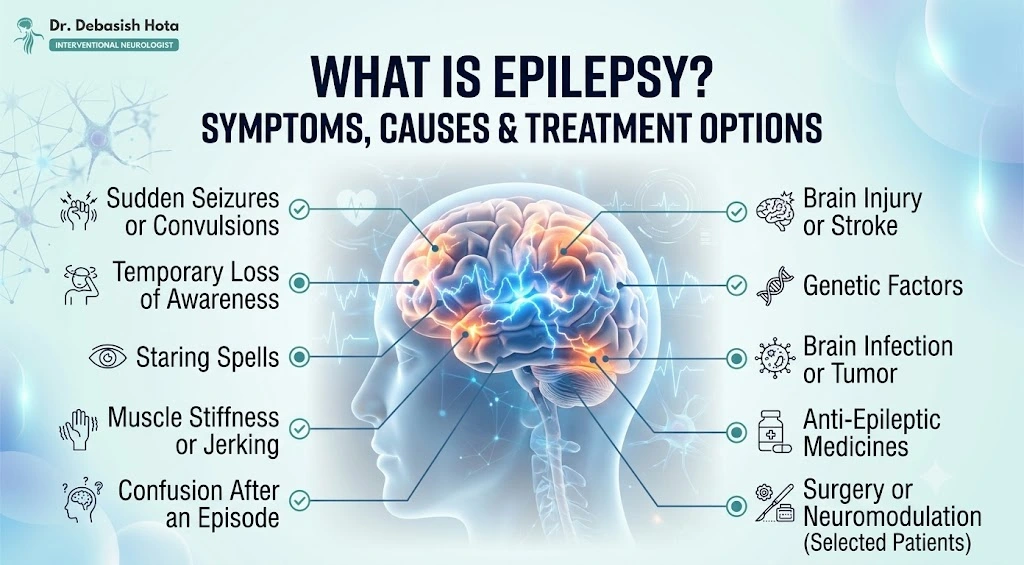
Understanding what is epilepsy is important because it is one of the most common neurological conditions worldwide. Epilepsy is characterized by a tendency to have recurrent, unprovoked seizures caused by abnormal electrical activity in the brain.
A single seizure does not necessarily mean a person has epilepsy. Many medical conditions can cause an isolated seizure, including fever, infections, low blood sugar, or head injury. A diagnosis of epilepsy usually requires careful medical evaluation by a neurologist.
With appropriate diagnosis, treatment, and follow-up care, many people with epilepsy are able to lead active, productive, and fulfilling lives.
What Is Epilepsy?
Epilepsy is a chronic neurological disorder in which a person experiences repeated seizures that are not triggered by temporary or reversible conditions.
Seizures occur when there is a sudden burst of abnormal electrical activity in the brain. Depending on which area of the brain is affected, seizures may cause changes in:
- Awareness
- Movement
- Sensation
- Behavior
- Emotions
- Memory
- Muscle control
Some seizures last only a few seconds, while others may continue for several minutes.
Not every seizure looks the same. Some people experience full-body convulsions, whereas others may simply stare blankly, become briefly confused, or notice unusual sensations.
Epilepsy vs. A Seizure: What’s the Difference?
One of the most common misconceptions is that epilepsy and seizures are the same.
They are related, but they are not identical.
What Is a Seizure?
A seizure is a sudden episode caused by abnormal electrical activity in the brain.
A seizure may occur because of:
- High fever
- Head injury
- Stroke
- Brain infection
- Low blood sugar
- Alcohol withdrawal
- Certain medications
- Electrolyte imbalance
A person may experience a single seizure without having epilepsy.
What Is Epilepsy?
Epilepsy is diagnosed when a person has recurrent unprovoked seizures or when a neurologist determines there is a high likelihood of future seizures based on clinical evaluation and diagnostic findings.
Understanding this distinction helps patients avoid unnecessary anxiety after experiencing a single seizure while emphasizing the importance of proper medical evaluation.
Common Symptoms and Warning Signs of Epilepsy
Symptoms vary depending on the type of seizure and the part of the brain involved.
Some people experience obvious convulsions, while others have subtle symptoms that may go unnoticed.
Common symptoms include:
- Sudden loss of awareness
- Brief staring spells
- Confusion after an episode
- Uncontrolled jerking movements
- Muscle stiffness
- Sudden falls
- Temporary inability to respond
- Repetitive chewing or lip-smacking movements
- Unusual smells, tastes, or sensations
- Tingling sensations
- Sudden fear or anxiety without an obvious cause
After a seizure, some people may experience:
- Fatigue
- Headache
- Muscle soreness
- Temporary weakness
- Difficulty speaking
- Memory problems
- Sleepiness
The duration and severity of symptoms vary from person to person.
What Is an Epilepsy Aura?
Some individuals experience warning symptoms, known as an aura, before certain seizures.
An aura is actually a type of focal seizure and may occur seconds or minutes before a larger seizure.
Common aura symptoms include:
- A strange smell or taste
- A rising sensation in the stomach
- Tingling in one part of the body
- Sudden feelings of fear
- Déjà vu
- Visual disturbances
- Ringing in the ears
Not everyone with epilepsy experiences an aura.
Types of Epileptic Seizures
Understanding seizure types helps explain why epilepsy affects different people in different ways.
Broadly, seizures are classified into two major groups:
- Focal seizures
- Generalized seizures
Focal Seizures
Focal seizures begin in one specific area of the brain.
Symptoms depend on which brain region is affected.
Focal Aware Seizures
During these seizures, the person remains awake and aware.
Symptoms may include:
- Tingling
- Muscle twitching
- Visual changes
- Unusual smells
- Temporary speech difficulty
- Emotional changes
These episodes may last only a short time.
Focal Impaired Awareness Seizures
Awareness becomes partially or completely impaired.
The individual may:
- Stare blankly
- Make repetitive movements
- Wander aimlessly
- Be unable to respond
- Have little or no memory of the event afterward
These seizures may sometimes be mistaken for daydreaming or confusion.
Generalized Seizures
Generalized seizures involve both sides of the brain from the beginning.
Different forms include:
Tonic-Clonic Seizures
Previously called “grand mal seizures,” these are among the most recognizable seizure types.
Possible features include:
- Loss of consciousness
- Muscle stiffening
- Rhythmic jerking movements
- Temporary breathing changes
- Loss of bladder control in some individuals
- Confusion after the seizure
Recovery often takes several minutes or longer.
Absence Seizures
These seizures are more common in children but can also occur in adults.
Symptoms may include:
- Brief staring spells
- Sudden pause in activity
- Rapid blinking
- Immediate return to normal activity
Because they are brief, absence seizures can sometimes go unnoticed.
Myoclonic Seizures
These involve sudden, brief muscle jerks.
They often affect:
- Arms
- Shoulders
- Legs
Consciousness is usually preserved.
Atonic Seizures
These seizures cause a sudden loss of muscle tone.
The person may:
- Drop objects
- Suddenly collapse
- Experience head nodding
Protective headgear may sometimes be recommended for individuals who experience frequent falls.
Tonic Seizures
These involve sudden muscle stiffening, usually lasting a short time.
The person may fall if standing.
Clonic Seizures
These are characterized by repeated rhythmic muscle jerking movements.
They are less common than tonic-clonic seizures.
Can Epilepsy Develop at Any Age?
Yes. Epilepsy can develop during:
- Infancy
- Childhood
- Adolescence
- Adulthood
- Older age
Some forms are more common in children, while others are frequently diagnosed later in life due to conditions such as stroke, traumatic brain injury, brain tumors, or neurodegenerative disorders.
Regardless of age, recurrent seizures should always be evaluated by a qualified healthcare professional.
When Should You Seek Medical Attention?
Medical evaluation is recommended if someone experiences:
- A first-time seizure
- Recurrent unexplained seizures
- Loss of consciousness without an obvious cause
- Repeated staring episodes
- Sudden episodes of confusion
- Muscle jerking without explanation
- Seizures associated with injury
Prompt neurological assessment helps determine the underlying cause and guides appropriate management.
What Causes Epilepsy?
Epilepsy develops when the brain has a tendency to produce recurrent, unprovoked seizures. In many people, the exact cause cannot be identified. In others, epilepsy may be linked to structural, genetic, infectious, metabolic, immune-related, or developmental factors.
Understanding the underlying cause helps neurologists develop an individualized treatment plan.
Common Causes of Epilepsy
Genetic Factors
Some forms of epilepsy are associated with inherited genetic changes that affect the brain’s electrical activity. Having a family history of epilepsy may increase the likelihood of certain epilepsy syndromes, although many people with epilepsy have no affected relatives.
Brain Injury
Traumatic brain injuries from road traffic accidents, falls, sports injuries, or other head trauma may increase the risk of developing epilepsy, sometimes months or years after the injury.
Stroke
Stroke is one of the most common causes of epilepsy in older adults. Damage to brain tissue following a stroke can sometimes lead to recurrent seizures.
Brain Tumors
Both benign and malignant brain tumors may trigger seizures by disrupting normal electrical activity in the brain.
Brain Infections
Certain infections affecting the brain can increase seizure risk, including:
- Meningitis
- Encephalitis
- Neurocysticercosis (in regions where it is more common)
Prompt diagnosis and treatment of these infections are important.
Developmental and Neurological Conditions
Some neurological or developmental disorders may be associated with epilepsy, particularly when brain development has been affected before or shortly after birth.
Unknown Cause
Despite thorough evaluation, no definite cause is identified in many individuals. This does not prevent effective treatment, and many patients achieve good seizure control with appropriate management.
What Can Trigger a Seizure?
People with epilepsy may have specific seizure triggers. Identifying and avoiding personal triggers may help reduce seizure frequency, although triggers vary from one person to another.
Common triggers include:
- Missing anti-seizure medications
- Sleep deprivation
- Physical or emotional stress
- Fever or acute illness
- Flashing lights (in some forms of photosensitive epilepsy)
- Excess alcohol consumption
- Recreational drug use
- Hormonal changes in some individuals
- Skipping meals or prolonged fasting in certain situations
Keeping a seizure diary can help patients and healthcare providers identify patterns over time.
How Is Epilepsy Diagnosed?
Diagnosing epilepsy involves more than confirming that a seizure has occurred. A neurologist aims to determine whether the event was truly a seizure, identify its cause, classify the seizure type, and develop an appropriate treatment plan.
Diagnosis usually begins with a detailed medical history and neurological examination.
Medical History
Your neurologist may ask questions about:
- What happened before, during, and after the episode
- Duration of the event
- Loss of consciousness
- Abnormal movements
- Family history of seizures
- Previous head injuries
- Current medications
- Other medical conditions
Whenever possible, information from someone who witnessed the event can be very helpful.
Neurological Examination
A neurological examination evaluates:
- Muscle strength
- Sensation
- Reflexes
- Balance and coordination
- Vision
- Speech
- Memory and cognitive function
This examination may provide clues about the affected area of the brain.
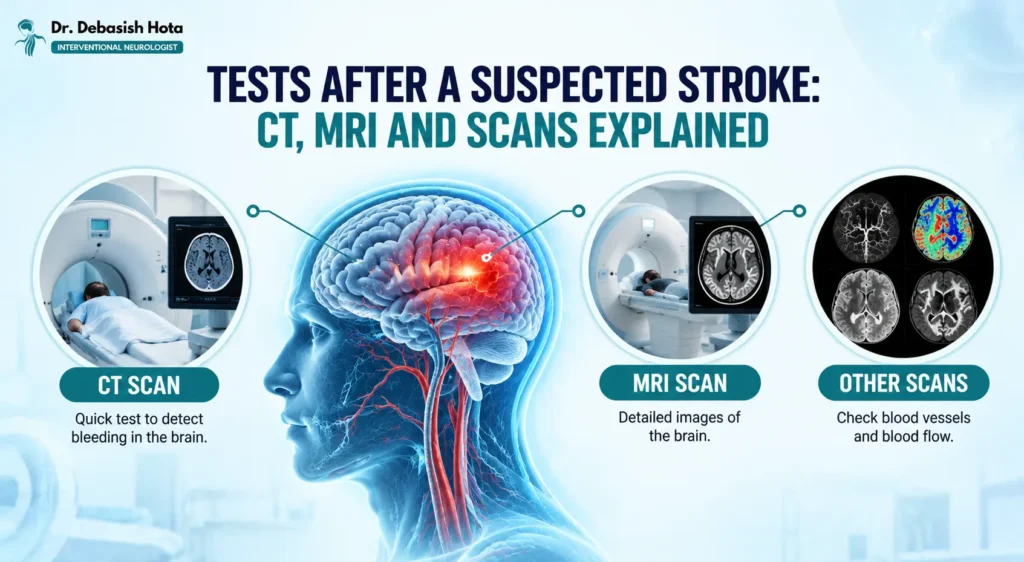
Electroencephalogram (EEG)
An EEG (Electroencephalogram) records the brain’s electrical activity using small electrodes placed on the scalp.
EEG may help:
- Detect abnormal electrical patterns
- Classify seizure type
- Support the diagnosis of epilepsy
- Guide treatment planning
A normal EEG does not completely rule out epilepsy, and additional testing may sometimes be required.
MRI Brain
Magnetic Resonance Imaging (MRI) produces detailed images of the brain.
MRI may help identify structural causes such as:
- Previous stroke
- Brain tumors
- Scarring
- Developmental abnormalities
- Vascular malformations
MRI findings assist neurologists in understanding the cause of seizures and planning treatment.
Blood Tests
Blood tests may be recommended to evaluate conditions that can contribute to seizures, such as:
- Low blood sugar
- Electrolyte imbalances
- Infections
- Liver or kidney disorders
- Medication levels (for patients already receiving anti-seizure therapy)
Additional Tests
Depending on the clinical situation, additional investigations may include:
- Video EEG monitoring
- CT scan of the brain (especially in emergency settings)
- Genetic testing for selected patients
- Neuropsychological assessment
- Lumbar puncture if infection is suspected
The choice of tests depends on each individual’s symptoms and medical history.
Treatment Options for Epilepsy
Treatment aims to reduce or prevent seizures while minimizing side effects and helping patients maintain their quality of life.
The most appropriate treatment depends on:
- Seizure type
- Cause of epilepsy
- Age
- Overall health
- Lifestyle
- Individual preferences
Anti-Seizure Medications
For many people, anti-seizure medications are the first line of treatment.
These medicines work by helping stabilize abnormal electrical activity in the brain.
Treatment plans are individualized, and medication should always be taken exactly as prescribed.
Patients should not stop anti-seizure medication without consulting their neurologist, as sudden withdrawal may increase seizure risk.
Epilepsy Surgery
Some individuals continue to have seizures despite appropriate medication.
In carefully selected patients, epilepsy surgery may be considered if the seizures originate from a specific area of the brain that can be treated safely.
Surgery is recommended only after comprehensive evaluation by an experienced epilepsy team.
Vagus Nerve Stimulation (VNS)
Vagus Nerve Stimulation involves a small implanted device that delivers electrical impulses to the vagus nerve.
VNS may be considered for certain patients whose seizures are not adequately controlled with medication and who are not suitable candidates for surgery.
Dietary Therapy
Specialized dietary approaches, such as the ketogenic diet, may be recommended for selected children and adults with difficult-to-control epilepsy.
These diets should only be started and monitored under medical and nutritional supervision.
Regular Follow-Up
Ongoing follow-up helps healthcare providers:
- Monitor seizure control
- Adjust medications when necessary
- Assess side effects
- Review safety precautions
- Support long-term management
Regular follow-up appointments remain an important part of epilepsy care.
Seizure First Aid: What to Do
Knowing how to respond during a seizure can help keep the person safe.
If someone has a seizure:
- Stay calm.
- Protect the person from nearby hazards.
- Gently place something soft under their head if possible.
- Turn the person onto their side once it is safe to do so.
- Loosen tight clothing around the neck.
- Stay with the person until they are fully awake and aware.
- Note approximately how long the seizure lasts.
Most seizures stop on their own within a few minutes.
What Not to Do During a Seizure
Avoid actions that could unintentionally cause harm.
Do not:
- Restrain the person’s movements.
- Put fingers, food, water, or objects into their mouth.
- Attempt to forcefully open the mouth.
- Give food, drink, or medication until the person is fully alert.
- Move the person unless they are in immediate danger.
When Is Emergency Medical Care Needed?
Seek immediate medical attention if:
- The seizure lasts longer than 5 minutes.
- Another seizure begins before the person fully recovers.
- The person has difficulty breathing after the seizure.
- The seizure occurs in water.
- Significant injury occurs during the seizure.
- The person is pregnant.
- The seizure is the person’s first known seizure.
- Recovery is unusually prolonged or incomplete.
Living Safely With Epilepsy
Many people with epilepsy lead active and fulfilling lives. Treatment, healthy habits, and appropriate safety measures can help reduce seizure-related risks.
Helpful recommendations include:
- Take medications consistently.
- Get adequate sleep.
- Avoid known seizure triggers.
- Attend regular follow-up appointments.
- Inform close family members or caregivers about seizure first aid.
- Consider wearing medical identification if recommended.
- Discuss driving, swimming, sports, and workplace safety with your neurologist based on your individual seizure control.
When to Consult a Neurologist
Consult a neurologist if you:
- Experience a first-time seizure
- Have recurrent unexplained seizures
- Notice changes in seizure frequency or pattern
- Continue having seizures despite medication
- Experience medication side effects
- Are planning pregnancy while living with epilepsy
- Need guidance regarding driving, employment, or lifestyle adjustments
Specialist evaluation helps ensure accurate diagnosis and individualized management.
Risks and Limitations
Epilepsy affects individuals differently, and treatment outcomes vary depending on the seizure type, underlying cause, response to medication, and overall health.
While many people achieve good seizure control with appropriate treatment, some individuals may require long-term therapy or specialized interventions. Treatment decisions should always be individualized and made in consultation with a qualified neurologist.
Conclusion
Epilepsy is a chronic neurological condition characterized by recurrent, unprovoked seizures. Although receiving an epilepsy diagnosis can be overwhelming, advances in diagnosis and treatment have enabled many people to successfully manage their condition and maintain an active lifestyle.
If you or someone you know experiences unexplained or recurrent seizures, consult a qualified neurologist for a comprehensive evaluation. Early diagnosis, individualized treatment, and regular follow-up can help support effective long-term seizure management.
Medical Disclaimer
This article is intended for educational purposes only and should not replace professional medical advice, diagnosis, or treatment. If you experience a first seizure, recurrent seizures, or any neurological symptoms, seek prompt evaluation from a qualified healthcare professional. In a seizure emergency or if a seizure lasts longer than five minutes, seek immediate emergency medical assistance.
Frequently Asked Questions
1. What is epilepsy?
Epilepsy is a chronic neurological disorder in which a person experiences recurrent, unprovoked seizures caused by abnormal electrical activity in the brain. A single seizure does not necessarily mean someone has epilepsy, and diagnosis requires careful medical evaluation.
2. What causes epilepsy?
Epilepsy can result from several causes, including genetic factors, stroke, traumatic brain injury, brain infections, brain tumors, developmental conditions, or structural abnormalities of the brain. In many individuals, no specific cause is identified despite detailed evaluation.
3. What are the common symptoms of epilepsy?
Symptoms vary depending on the type of seizure but may include:
- Sudden loss of awareness
- Staring spells
- Uncontrolled jerking movements
- Muscle stiffness
- Temporary confusion
- Unusual sensations or smells
- Brief periods of unresponsiveness
- Loss of consciousness
Some people experience an aura before certain seizures.
4. Can epilepsy develop in adulthood?
Yes. Although epilepsy often begins during childhood, it can develop at any age. Adult-onset epilepsy may be associated with stroke, head injury, brain tumors, infections, or other neurological conditions.
5. How is epilepsy diagnosed?
Diagnosis typically includes:
- Detailed medical history
- Neurological examination
- Electroencephalogram (EEG)
- MRI Brain (when indicated)
- Blood tests
- Additional investigations such as video EEG monitoring in selected cases
A neurologist determines the appropriate evaluation based on the individual’s symptoms.
6. Can epilepsy be cured?
Some forms of epilepsy may resolve over time, while others require long-term treatment. Many individuals achieve good seizure control with anti-seizure medications or other therapies, but treatment outcomes vary from person to person.
7. What medications are used to treat epilepsy?
Anti-seizure medications are usually the first-line treatment. The choice of medication depends on factors such as:
- Type of seizure
- Age
- Overall health
- Other medical conditions
- Potential medication side effects
Treatment plans should always be individualized by a neurologist.
8. What should I do if someone has a seizure?
If someone is having a seizure:
- Stay calm.
- Protect them from injury.
- Turn them onto their side when it is safe.
- Do not restrain their movements.
- Do not place anything inside their mouth.
- Stay with them until they recover.
Seek emergency medical care if the seizure lasts longer than five minutes, repeated seizures occur without recovery, or significant injury develops.
9. Can stress trigger epilepsy seizures?
Stress may act as a seizure trigger for some individuals. Other possible triggers include sleep deprivation, missed medications, fever, illness, excessive alcohol intake, and flashing lights in people with photosensitive epilepsy.
10. Is epilepsy hereditary?
Some forms of epilepsy have a genetic component, but having a family history does not necessarily mean a person will develop epilepsy. Many people diagnosed with epilepsy have no affected relatives.
11. Can people with epilepsy play sports?
Many people with well-controlled epilepsy can participate in sports and physical activity. The safest activities depend on seizure type, seizure control, and medical advice. Activities such as swimming, climbing, or contact sports may require additional precautions.
12. Can epilepsy affect pregnancy?
Many women with epilepsy have healthy pregnancies. However, pregnancy planning should ideally occur before conception because some anti-seizure medications may require adjustment. Ongoing care from a neurologist and obstetrician is important throughout pregnancy.
13. Can children outgrow epilepsy?
Some childhood epilepsy syndromes improve with age, while others require long-term management. The long-term outlook depends on the specific epilepsy syndrome and individual response to treatment.
14. Can people with epilepsy drive?
Driving regulations vary depending on local laws and an individual’s seizure control. People with epilepsy should discuss driving eligibility with their neurologist and follow applicable legal requirements.
15. When should someone consult a neurologist?
A neurologist should evaluate anyone who experiences:
- A first seizure
- Recurrent unexplained seizures
- Changes in seizure pattern
- Poor seizure control despite medication
- Medication-related side effects
- Concerns about pregnancy, work, driving, or daily activities