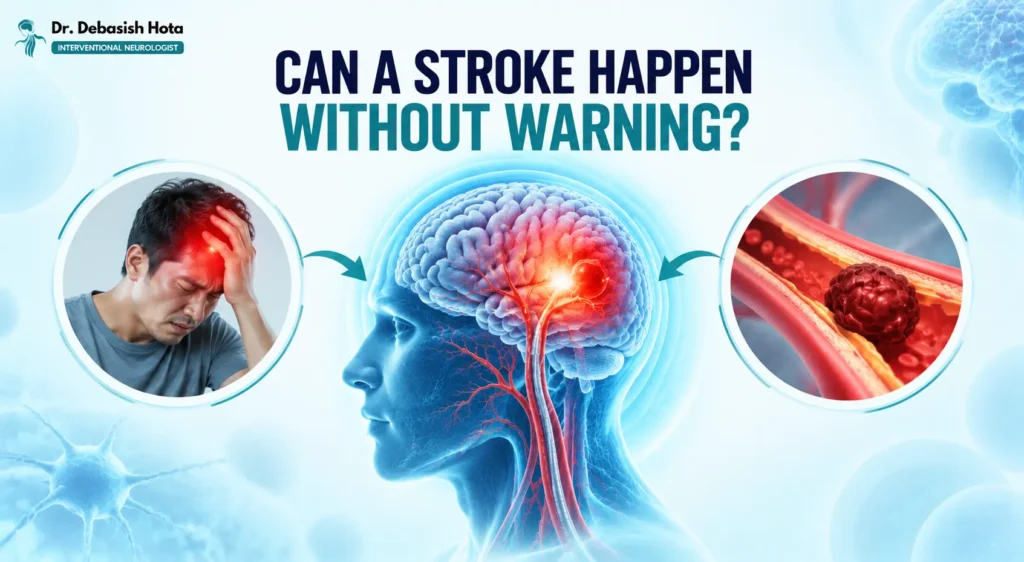
“It happened suddenly, there was no warning at all.” Families often say this after a loved one has a stroke. A stroke does appear suddenly, but that does not always mean there were no signs. In many people, the body gives small hints days, weeks or even years earlier, and these are easy to miss.
In this blog, we explain whether a stroke can happen without warning, what the early signs look like and which risk factors you should know about.
So, Can a Stroke Happen Without Warning?
The honest answer is both yes and no.
- Yes, because the stroke itself starts suddenly. A blocked or burst artery can cause symptoms within seconds, and some people have no symptoms beforehand.
- No, because many people do have warning signs, such as a mini-stroke, or long-standing risk factors like high blood pressure that quietly damage blood vessels for years.
Understanding both sides helps you act early. To know how a stroke develops and is treated, it also helps to know that prevention starts long before the first symptom.
Warning Sign 1: A Mini-Stroke (TIA)
A transient ischemic attack (TIA), often called a mini-stroke, is the most important warning sign. It happens when blood flow to a part of the brain is blocked briefly and then returns on its own.
Symptoms are the same as a stroke, such as sudden weakness, slurred speech or loss of vision, but they disappear within minutes to a few hours. Many people ignore a TIA because they feel normal afterwards.
This is a dangerous mistake. A TIA means the brain has already come close to a full stroke, and the risk of a major stroke is highest in the first days after it. Anyone who has had a TIA should see a neurologist urgently, even if all symptoms have gone.
Warning Sign 2: Sudden Symptoms That Come and Go
Even without a clear TIA, some people notice brief episodes such as:
- Sudden blurred or lost vision in one eye, like a curtain coming down
- A moment of slurred speech or trouble finding words
- Brief numbness or tingling in the face, arm or leg on one side
- A sudden episode of dizziness or loss of balance
These episodes are easy to blame on tiredness, stress or low sugar. If they appear suddenly and affect one side of the body, they should be checked.
Warning Sign 3: A Sudden, Severe Headache
A sudden, very severe headache, often described as the worst headache of life, can be a sign of bleeding in the brain. It may come with vomiting, neck stiffness, drowsiness or confusion. This needs emergency care right away.
The Classic Stroke Signs: Remember BE-FAST
When a stroke begins, symptoms appear suddenly. The BE-FAST check helps you recognise them:
- B – Balance: Sudden loss of balance or coordination
- E – Eyes: Sudden blurred, double or lost vision
- F – Face: One side of the face droops
- A – Arms: One arm is weak or drifts downward
- S – Speech: Slurred or confused speech
- T – Time: Call for emergency help immediately
Other signs include sudden confusion, severe dizziness, trouble walking and a sudden severe headache. Symptoms in women may also include unexplained weakness, sudden hiccups, nausea or confusion, so any sudden change should be taken seriously.
What Is a Silent Stroke?
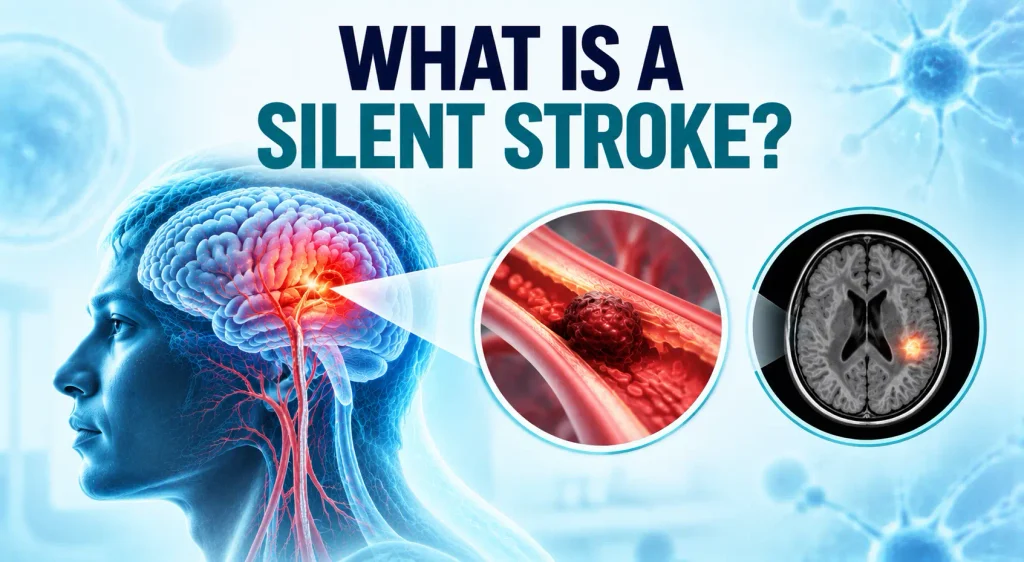
A silent stroke damages a small part of the brain without causing obvious symptoms. The person may not notice anything, or may only feel mild forgetfulness, slower thinking or small changes in balance or mood.
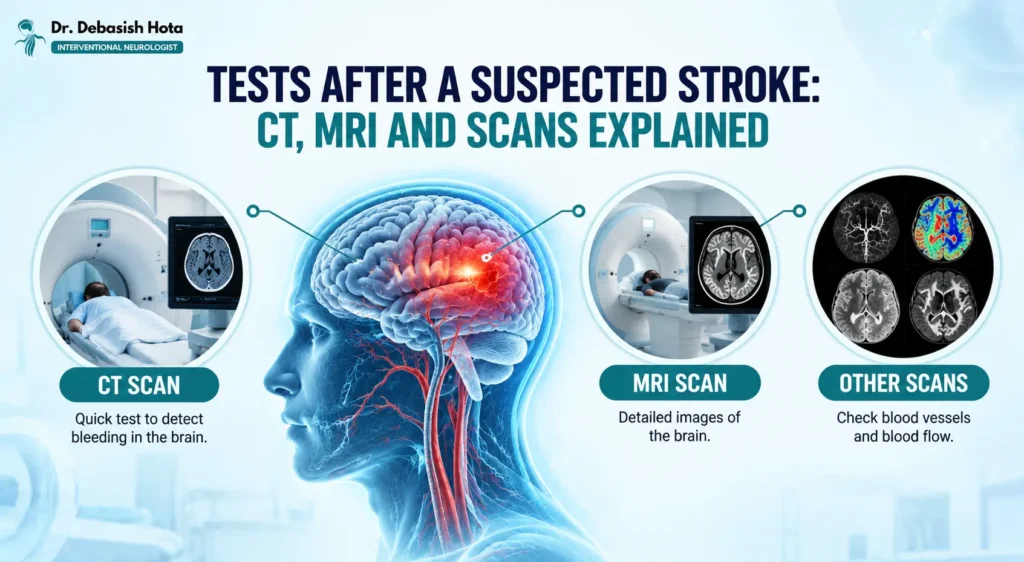
Silent strokes are often found by accident on a brain MRI. They matter because they raise the risk of a major stroke, and repeated silent strokes can slowly affect memory and thinking, which may lead to vascular dementia.
Why Do Some Strokes Seem to Come “Out of the Blue”?
A stroke can feel sudden because the damage building up in the blood vessels is invisible. Over the years:
- High blood pressure strains and weakens artery walls
- High cholesterol builds fatty plaque inside the arteries
- High blood sugar damages the lining of blood vessels
- An irregular heartbeat can let clots form in the heart and travel to the brain
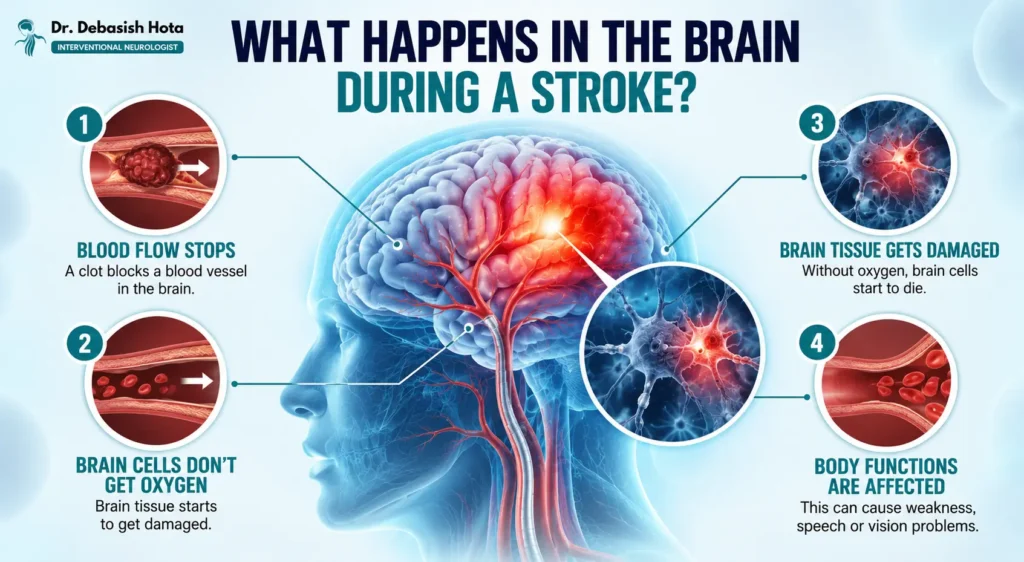
None of these may cause symptoms for a long time. Then one day a clot blocks an artery or a weak vessel bursts. So the stroke may be sudden, but the cause has often been building for years.
Major Risk Factors for Stroke
Knowing your risk is the best way to prevent a stroke. The main risk factors are:
Risk factors you can control:
- High blood pressure, the biggest single risk factor
- Diabetes and high blood sugar
- High cholesterol
- Smoking and tobacco use
- Excess alcohol
- Obesity and an unhealthy diet high in salt and fried food
- Lack of physical activity
- Irregular heartbeat (atrial fibrillation)
- Sleep apnoea and chronic stress
Risk factors you cannot change:
- Age, as risk rises after 55, though strokes in younger adults are not rare
- Family history of stroke
- A previous stroke or TIA
- Certain heart and blood vessel conditions present from birth
People with diabetes should also pay attention to numbness, tingling or burning in the feet, since this can be an early sign of nerve damage called peripheral neuropathy, which often shows that blood sugar has been uncontrolled for some time and the blood vessels may be affected too.
Can Young People Have a Stroke?
Yes. Stroke is not only a disease of old age. Younger adults can have strokes because of high blood pressure, diabetes, smoking, drug use, heart conditions, blood clotting disorders, or tears in the neck arteries. Never ignore sudden stroke symptoms because of age.
Hidden Causes That Doctors Look For
Sometimes a stroke is caused by a problem that can be treated or prevented once it is found. These include:
- Narrowing of the carotid arteries in the neck
- Aneurysms, which are weak, bulging spots in brain blood vessels
- Abnormal tangles of blood vessels in the brain
- Clots coming from the heart
Some of these can be treated with minimally invasive procedures, such as stenting or coiling, under neurointervention, which can lower the risk of a future stroke when they are found in time.
How to Lower Your Risk of Stroke
Most strokes are preventable. You can reduce your risk by:
- Checking your blood pressure regularly and keeping it in the range your doctor advises
- Controlling blood sugar and cholesterol with diet, exercise and medicines
- Quitting smoking and limiting alcohol
- Eating less salt, fried and processed food, and more fruit, vegetables and whole grains
- Exercising for at least 30 minutes on most days
- Maintaining a healthy weight
- Taking prescribed medicines regularly, without stopping on your own
- Getting a health check-up every year, especially after 40, or earlier if you have risk factors
What Should You Do If You Notice a Warning Sign?
- Do not wait. Symptoms that disappear can still mean a TIA.
- Note the time symptoms began, since treatment depends on it.
- Go to the nearest stroke-ready hospital immediately, and do not drive yourself.
- Do not give food, water or home remedies to someone with stroke symptoms.
- Follow up with a neurologist after the emergency, even if you feel fine.
When Should You See a Neurologist?
Book a consultation with a neurologist if you have had a TIA or sudden, brief stroke-like symptoms, if you have high blood pressure, diabetes, heart disease or a family history of stroke, or if you have unexplained dizziness, headaches or memory changes.
Final Thoughts
A stroke may begin suddenly, but the signs often appear earlier, through a mini-stroke, brief stroke-like episodes or years of uncontrolled blood pressure, sugar and cholesterol. Learning the warning signs, knowing your risk factors and acting quickly can prevent a stroke or limit the damage it causes.
Disclaimer: This blog is for general awareness only and does not replace professional medical advice. If you or someone near you shows signs of a stroke, seek emergency medical care immediately.
People Also Ask (FAQs)
Can a stroke happen suddenly without any symptoms?
A stroke usually causes sudden symptoms, but some strokes, called silent strokes, cause no obvious symptoms at all. Even when a stroke seems to come without warning, risk factors such as high blood pressure or diabetes have usually been present for years.
What are the warning signs of a stroke a month before?
There may be no signs, but some people notice mini-stroke episodes, such as brief weakness, slurred speech, vision loss or dizziness that goes away on its own. These should never be ignored. Any such episode needs a neurologist’s evaluation.
Can a stroke happen without a headache?
Yes. Most ischemic strokes, which are caused by a blockage, do not cause a headache. Severe headache is more common in bleeding strokes. The absence of a headache does not rule out a stroke.
Can you have a stroke and not know it?
Yes. A silent stroke can damage the brain without clear symptoms and is often found on an MRI scan done for another reason. Repeated silent strokes can affect memory and thinking over time.
Can a stroke happen at a young age?
Yes. Strokes in younger adults are linked to high blood pressure, diabetes, smoking, heart conditions, blood clotting problems and artery injuries. Sudden stroke symptoms need emergency care at any age.
Can stress cause a stroke?
Long-term stress can raise blood pressure and encourage unhealthy habits like smoking, poor sleep and overeating, which increase stroke risk. Stress alone is rarely the only cause, but managing it is part of prevention.